
A bird’s eye view of Togo’s last national park

By Stephanie Bartlett and Paulo Ditzel
19 February

Red-checked Wattle-eye captured and released by IBCP’s 2026 field crew in Togo’s Fazao-Malfakassa National Park. Photo by Stephanie Bartlett and Paulo Ditzel.
On the side of a tiny dirt road connecting two small villages in rural Togo, we wake up before dawn to the chatter of Fork-tailed Drongos. We are inside the last remaining national park in Togo. We eat breakfast out of the back of our field truck by the light of our headlamps, listening to the distant staccato song of one of the country’s last remaining Great Blue Turacos. We set out to open our mist nets placed throughout the nearby gallery forest, and wait.

Standard-winged Nightjar in Togo’s Fazao-Malfakassa National Park. Photo by Stephanie Bartlett.
Sweat bees circle us, continuously trying to get a drink from our eyes, and honeybees attempt to find their way into our shoes (we haven’t changed our socks in over a week). We hear the confusing warbling of multiple species of greenbul and the mournful wails of a pair of Western Long-tailed Hornbills dancing around the canopy above us. The constant hum of insect life is ever present. Our first net check yields multiple species including the ever-elusive Red-cheeked Wattle-eye, a species that has only ever been observed a handful of times in the country.
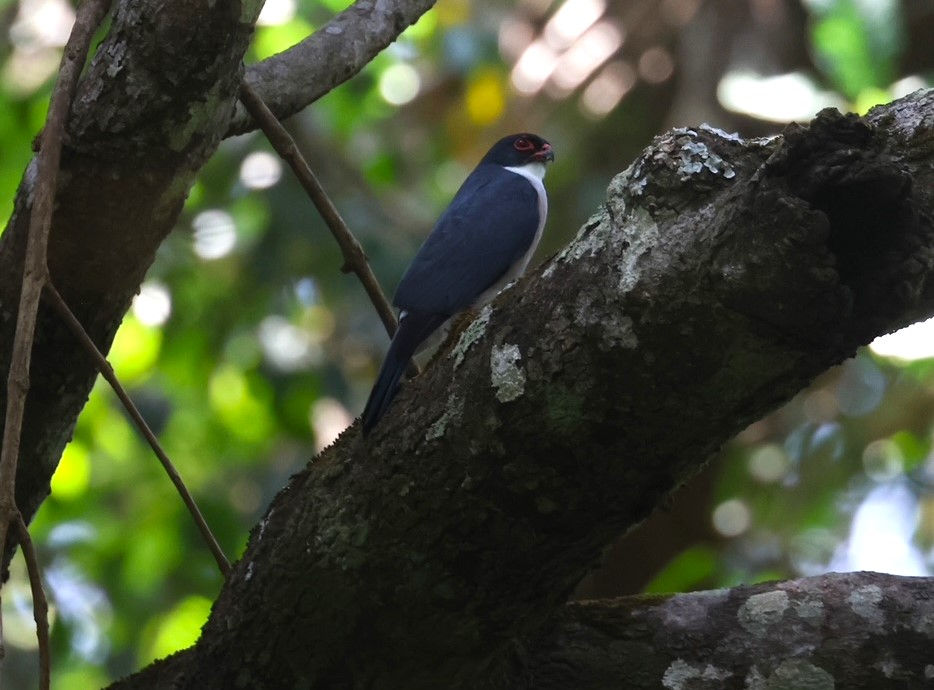
Red-thighed Sparrowhawk in Togo’s Fazao-Malfakassa National Park. Photo by Stephanie Bartlett.
Each bird is carefully processed, photographed, and quickly released. Many of the other species have rarely been banded before, and are even harder to observe in the dense and dark gallery forest understory. We feel incredibly privileged to see these species up close, as they are a tangible reminder of what is at stake if this park is lost.

Paulo Ditzel and Stephanie Bartlett with Blue-billed Malimbes at a mist netting site in Fazao-Malfakassa National Park. Photo courtesy of Stephanie Bartlett and Paulo Ditzel.
Over the past month, we have conducted mist netting at five sites in Fazao-Malfakassa National Park, banding over 50 species of birds. Over the next two months we will survey seven more sites and put in hundreds of hours of observations in various habitats throughout the park. The goal of the project is to assess the diversity of birds in this largely understudied area in the hopes of supporting efforts to protect and value the park and its wildlife, using birds as environmental indicators.

Green Turaco in Togo’s Fazao-Malfakassa National Park. Photo by Stephanie Bartlett and Paulo Ditzel.
Another large goal of the project is to investigate the impact of human activity, which is, unfortunately, severe. Cattle graze freely, plantations encroach, and poachers run seemingly unchecked through the park, despite prohibitions on all these activities. Just the previous week, we found the remains of a Western Crested Guineafowl, a species still undocumented by scientists in the park, during a survey. In fact, our very banding station is set in one of the many poacher’s camps littered throughout the gallery forests. We are reminded daily that the park is under siege, and something needs to be done.

Western Crested Guineafowl feather at a poacher’s camp in Fazao-Malfakassa National Park. Photo by Stephanie Bartlett and Paulo Ditzel.
The importance of park cannot be understated both in terms of conservation and also culturally. In our short time here, we have already recorded some species that are not really “supposed” to be here. The Park represents one of the few remaining natural spaces in the Dahomey Gap, the area from Ghana, through Togo, and into Benin, that acts as a biogeographical barrier between the Upper Guinean forests of West Africa and the Lower Guinean-Congolian forests of Central Africa. Thus, the species found in pockets of adequate habitat here can belong to either assemblage of birds. That, coupled with the fact that no one is really looking at birds here, means we never know what we’re going to find. Which is just as exciting as it is complicated.
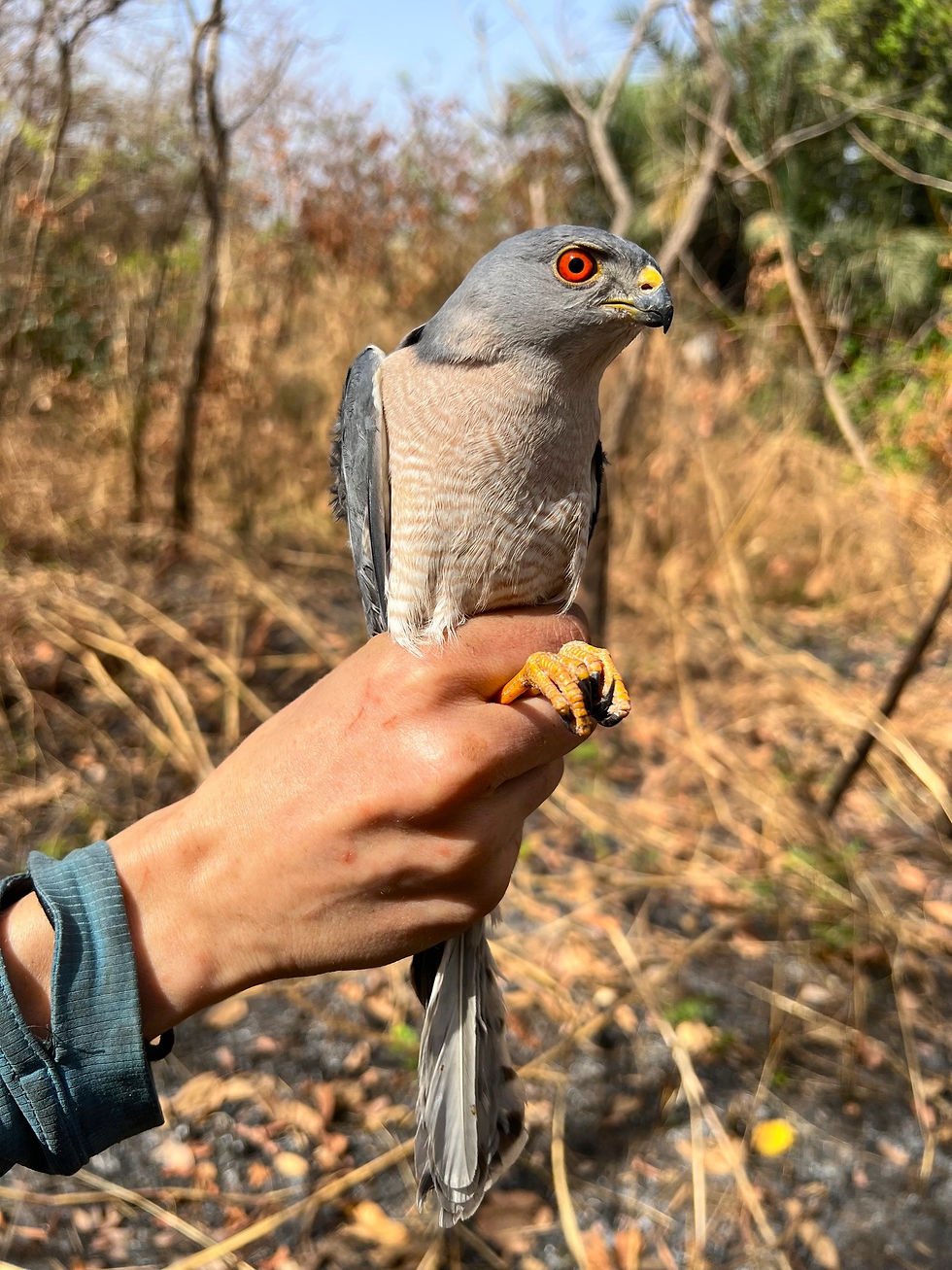
Shikra in Togo’s Fazao-Malfakassa National Park. Photo by Stephanie Bartlett and Paulo Ditzel.
Most birds here are incredibly secretive in response to the extreme human pressure. Mammals are even harder: you’re lucky if you catch a glimpse of their rears when they explode from bushes, frightened by the sounds of our footsteps. Photographing wildlife in the park has proven to be an extremely difficult yet rewarding task, requiring a lot of patience and effort. There is so much beauty to be documented here!
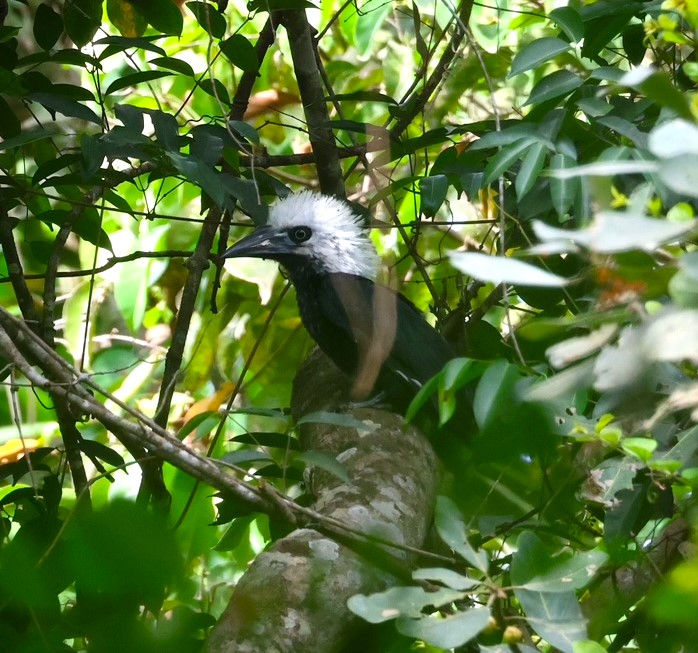
Western Long-tailed Hornbill in Togo’s Fazao-Malfakassa National Park. Photo by Stephanie Bartlett.
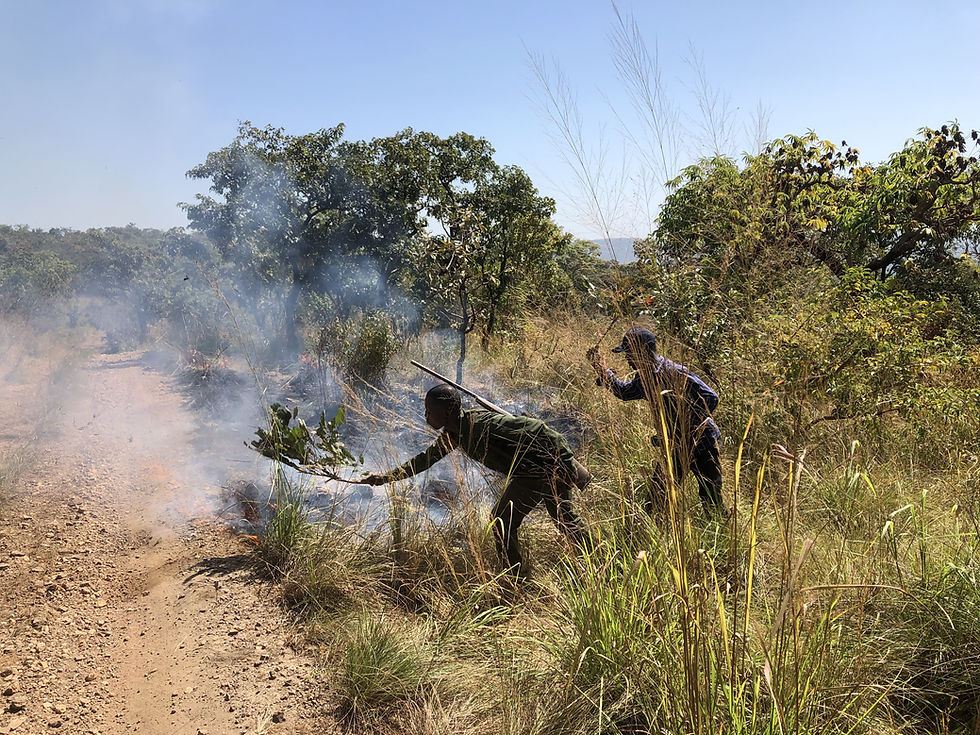
But there is hope! We have had some encouraging conversations with the new, very recently appointed park manager (“le Consérvateur”) about the conservation of the park. Recently, reports of illegal activities have been swiftly dealt with. Nomadic herders have been given one week to evacuate the park, illegal road work has been halted, poachers are being apprehended.

Yendoubouam Kourdjouak, and Paulo Ditzel, and Lin-Ernni Mikégraba Kaboumba in Togo’s Fazao-Malfakassa National Park. Photo by Stephanie Bartlett.
The goal is to let everyone know that the new management means business, that now there are consequences to breaking the rules. This is the last remaining natural haven for the incredible diversity of flora and fauna Togo has to offer. So while we, as huge bird enthusiasts and biologists, might be biased, we think we can all agree that these species deserve protection for current and future generations.

Forest Robin in Togo’s Fazao-Malfakassa National Park. Photo by Stephanie Bartlett.


Comments