
Bird in the Spotlight: Palm-nut Vulture

30 April, 2026
By Alexander Trifunovic

Palm-nut Vulture. Photo by Dick Daniels via theworldbirds.org.
The Palm-nut Vulture (Gypohierax angolensis) is a breathtakingly beautiful, unique raptor of tropical Africa’s humid forests. Strikingly different in appearance from other vultures, they have also gone by the name Vulturine Fish-Eagle. Adults are distinguished by their white and black plumage, amber eyes, and bright red facial skin. Juveniles are brownish, gradually acquiring their adult plumage over the course of five years as they mature. The Palm-nut Vulture is genetically distinct in a genus of its own, with Bearded and Egyptian Vultures as its closest living relatives.
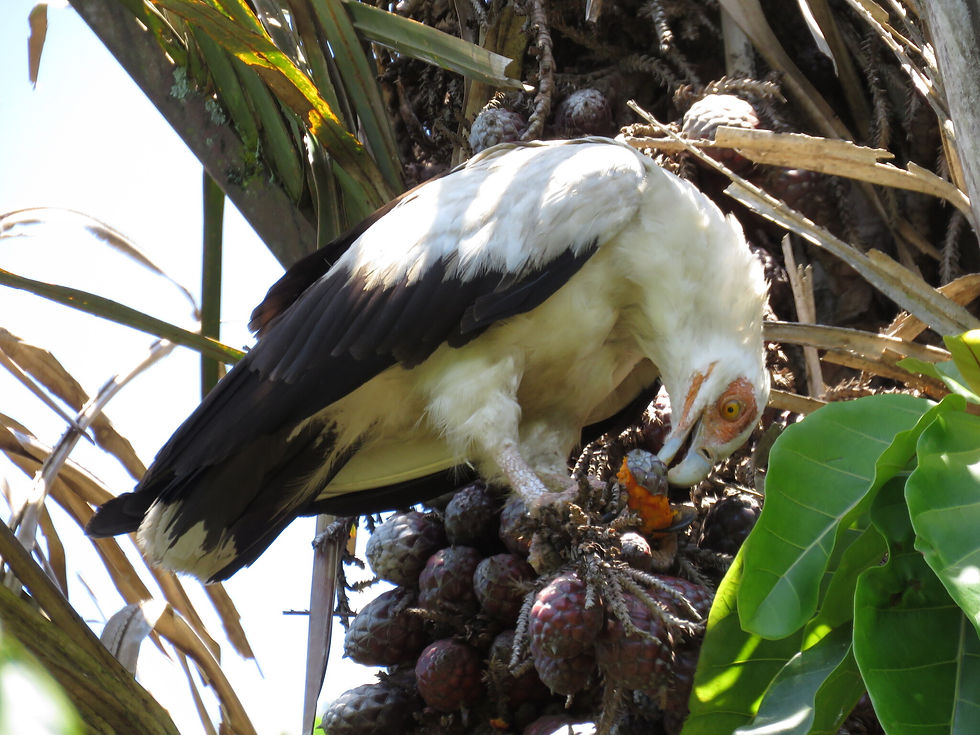
A Palm-nut Vulture tears apart a Raphia palm fruit. These fruits along with oil palm fruits make up about half their diet. Photo by Alan Bedford Shaw, CC BY-SA 4.0, via Wikimedia Commons
Palm-nut Vultures have a broad distribution, and can be found in riverside and coastal forests, mangrove swamps, and estuaries from Senegal to Cameroon, across Central Africa, and locally in the Rift Valley south to coastal South Africa. As their name indicates, Palm-nut Vultures are often associated with oil palms (Elaeis guineensis), and the fleshy fruits of oil and Raphia palms make up more than half of their diet. They also hunt a variety of prey including fish, crabs, snails, birds, insects, frogs, and sea turtle hatchlings. Palm-nut Vultures are opportunistic scavengers, and sometimes fill a similar niche as Hooded Vultures when feeding at large carcasses. However, unlike obligate scavengers such as Hooded Vultures, Palm-nut Vultures are partial vegetarians.
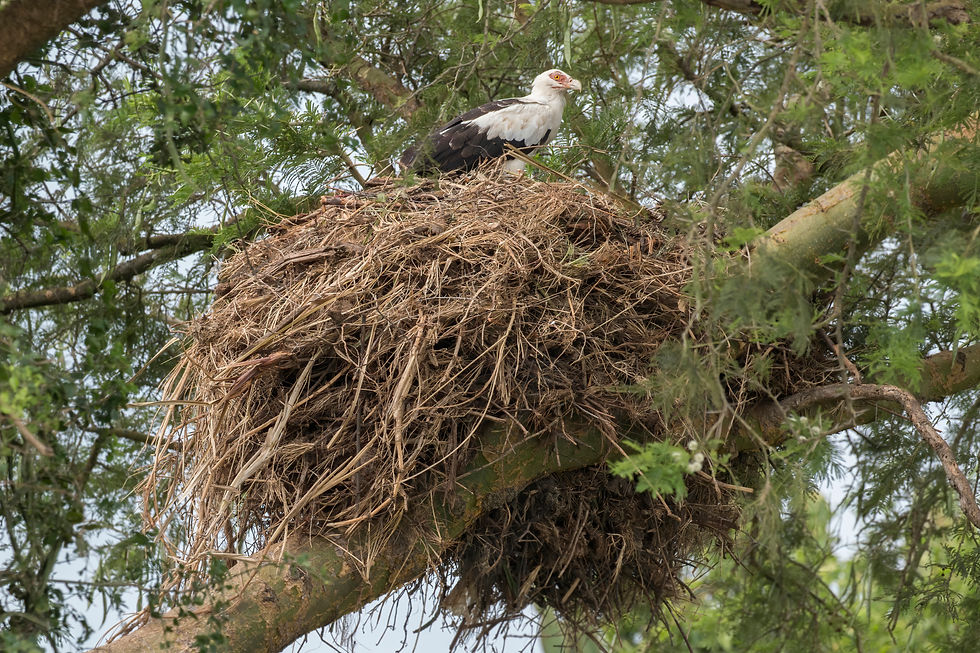
A Palm-nut Vulture sits atop its enormous stick nest. Pairs work together during the long breeding season to build their nest and raise a single chick. Photo by Charles J. Sharp, CC BY-SA 4.0, via Wikimedia Commons.
During the breeding season, a pair of Palm-nut Vultures builds a massive stick nest in a large tree, such as a baobab. The female lays a single egg and the pair takes turns incubating, brooding, and feeding the nestling. Parental care is prolonged in this species, with the pair spending up to nine months caring for their young after the egg hatches. The Palm-nut Vulture has been classified by the IUCN as Least Concern, but there are concerning indicators of potential declines. Threats such as poisoning, warming temperatures, habitat destruction for agriculture, and persecution may all be contributing factors. As a species that matures and reproduces slowly, Palm-nut Vultures are particularly at risk from hunting. They are hunted for bushmeat and belief-based uses and are unfortunately a common sight in West and Central African wildlife markets.
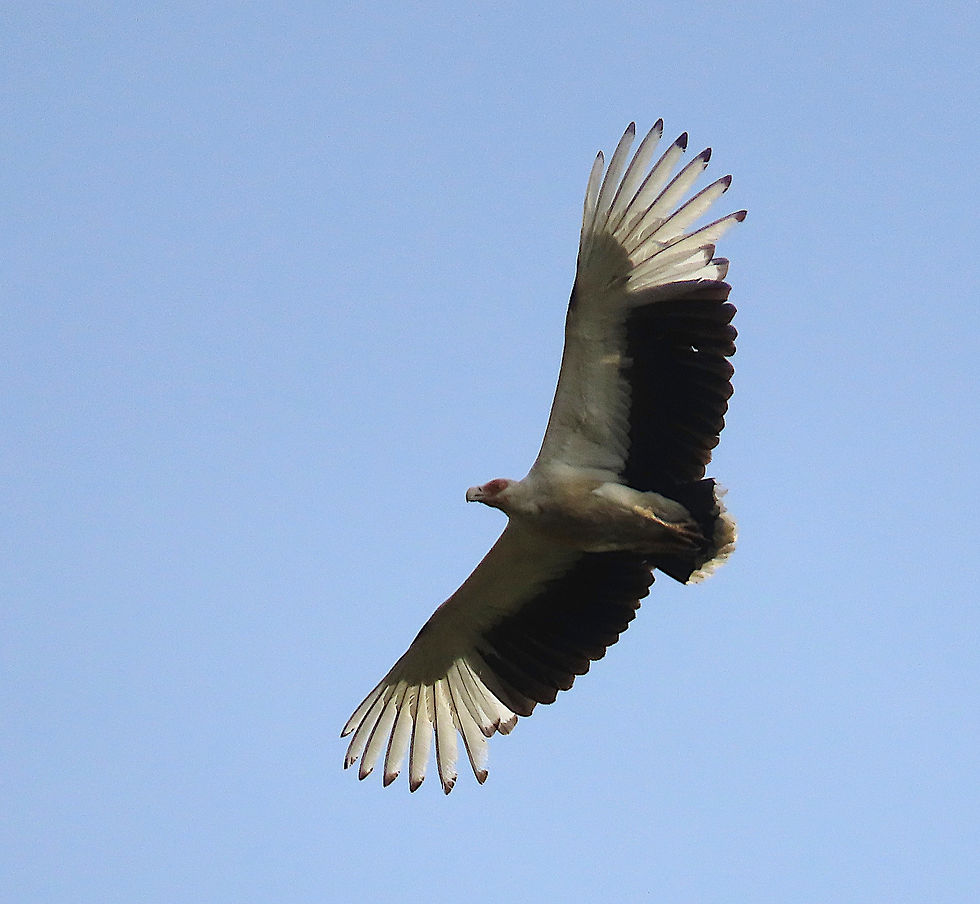
An adult Palm-nut Vulture flying over Fazao-Malfakassa National Park, Togo. Photo by Sylvain Uriot.
Research suggests that market surveys often underestimate hunting impacts on this species, as they are commonly consumed in hunting camps; in fact, one study showed Palm-nut Vultures were the most frequently consumed raptors and second-most frequently recorded bird (after the White-thighed Hornbill Bycanistes albotibialis) in hunting camps in Cameroon. IBCP is currently collecting data on Palm-nut Vultures in West Africa, both in the wild and in wildlife markets, to update knowledge of their population status and threats posed by trade to inform conservation efforts. May these gorgeous raptors adorn Africa’s skies and forests long into the future!
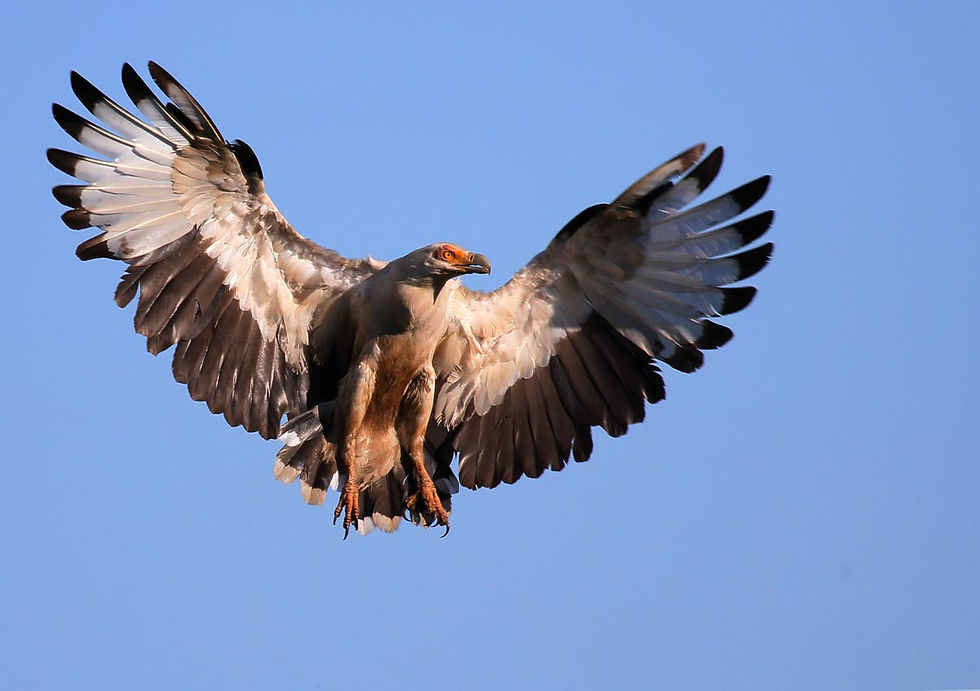
Palm-nut Vulture in flight. Photo by Sias van Schalkwyk via theworldbirds.org.


Comments