
IBCP research featured in MDPI Animal Science webinar
- IBCP

- Mar 31
- 5 min read
Updated: Apr 1
31 March, 2026

IBCP research presentation slide featuring co-authors Benjamín Salazar Samecash, Oscar Tsamajain Shiwig, Shan Su, and Robert J. Cooper.
MDPI's Journal Cluster of Animal Science webinar recently featured IBCP research presented by Dr. Nico Arcilla, who joined invited speakers Dr. Jan S. Suchodolski of Texas A&M University and Dr. Kimberly Boykin of Louisiana State University. For this webinar, MDPI invited three authors of publications featured on the covers of their animal (including wildlife) and veterinary science journals in 2025. During the March 23 event, speakers presented the research highlighted in their cover-featured publications and shared related work as well as recent findings from their research groups. This webinar aims to promote academic exchange, showcase impactful research in animal science, and encourage discussion within the research community.

MDPI webinar announcement.
Our presentation, entitled, “What's in a Bird's Name? Bird Records and Indigenous Names in Amazonian Territories of Peru,” featured research that started at the University of Georgia and was completed and published through IBCP. Our research explores patterns of biological and linguistic diversity through an inquiry into birds and their names in indigenous Amazonian territories inhabited by Aguaruna communities in northern Peru. Protecting indigenous lands in the tropics from immigration and habitat conversion is an important approach to mitigating the ongoing biodiversity extinction crisis, as well as a less well-known language extinction crisis, which is that half of the world’s languages have disappeared in the last 500 years, and we are expected to lose more than half the world's remaining languages by the end of this century.

Language hotspots around the world.
Many indigenous people in the tropics also have important ecological knowledge that is poorly known outside of their cultures. Many common and scientific names of birds, for example, come from Indigenous languages, some of which are no longer spoken or known. The name of the Hoatzin, for example, a tropical American bird, appears to originate in an Aztec language, Nahuatl. In New Zealand, indigenous Māori names are used for birds such as the kākāpō and tūī, and in Hawai'i, indigenous Polynesian names are used for endemic, endangered honeycreepers such as the 'i'iwi and the ākohekohe.

Examples of indigenous names for birds in New Zealand and Hawai'i.
Some bird species have many different names, such as the Eurasian Wren, which is called gärdsmyg in Swedish, Zaunkönig in German, and troglydyte mignon in French. If we have many different names in different languages, how do we know we are talking about the same species of bird – or any other organism, for that matter? Solving this problem was the life’s work of Swedish naturalist Carl von Linné, who devised the first and only universal system for naming species in the natural world, using Latin and ancient Greek as the basis of scientific names. Von Linné apparently used its French name as the basis of the wren’s scientific name, Troglodytes troglodytes.

Carl von Linné devised the first and only universal system for naming species in the natural world, using Latin and ancient Greek as the basis of scientific names such as that of the Eurasian Wren (Troglodytes troglodytes).
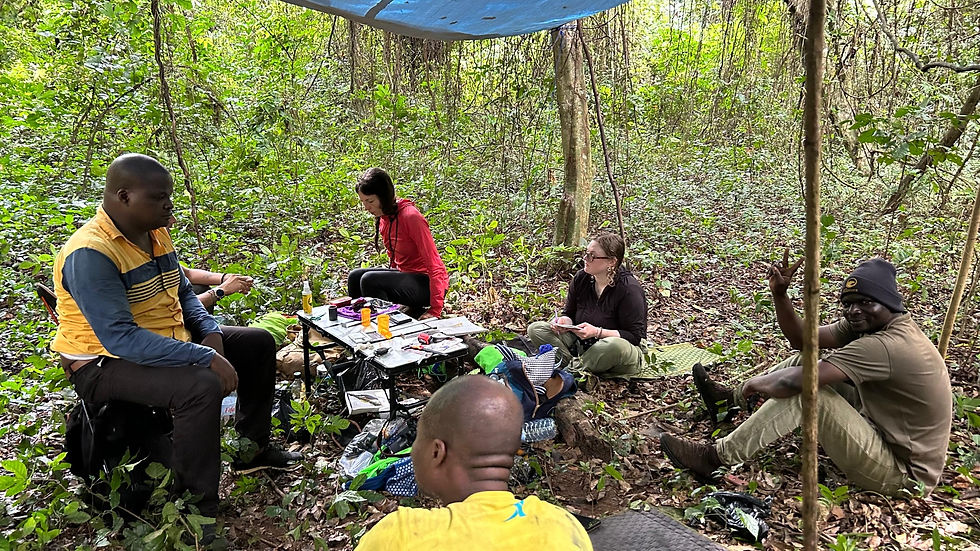
We explored indigenous Amazonian names for birds, working with a team of Peruvian and American researchers in Amazonian Indigenous territories where no previous bird surveys have been published. Between 2004 and 2020, we conducted 15 months of field research in the western Amazon basin of northern Peru, in the vicinity of the Marañón River, a major source of the Amazon River, near the border with Ecuador, where approximately 40,000 Indigenous residents speak Aguaruna (locally called awajún) as a native language, which existed exclusively in oral form until the 20th century.

We conducted 15 months of field research in northern Peru in the vicinity of the Marañón River, a major source of the Amazon River.
In this region of the Amazon, entry into Indigenous territories by non-residents is only possible by special permission, a factor that allows Aguaruna communities to be highly successful in maintaining control over their lands, but has also meant that almost no scientific studies by ecologists have taken place. Past studies by anthropologists had suggested that unique Aguaruna names exist for 80%–90% of animal species present in our study region, so we expected a majority of the bird species we identified in the study area to have unique Aguaruna names.

Some of the 427 bird species we documented during fieldwork, in this case through capturing and releasing them from mist nets.
Using binoculars and mist nets, we documented 427 bird species in 51 families in our study area. During our fieldwork, we consulted with Aguaruna experts to identify local names for bird species and evaluated the occurrence of Aguaruna bird names with reference to scientific nomenclature. Birds documented include eight wintering Nearctic–Neotropical migratory species and 419 year-round residents. Contrary to expectation, we found that unique Aguaruna names were reported for just over one-third (38%; 161) of bird species documented, while 31% (132) shared generic names with one or more other species and the remaining 31% (134) of the species in the study area did not have any known Aguaruna name.

Proportions of total species documented with unique, generic, or no Aguaruna names.
Avian family membership to be a significant predictor of whether a bird species had a unique Aguaruna name. Avian families in which a majority of the species documented had unique Aguaruna names included parrots (Psittacidae; 88%), nightjars (Caprimulgidae; 80%), and manakins (Pipridae; 78%). Factors that appeared to influence whether bird species had Aguaruna names included conspicuous appearance, vocalizations, and/or behavior. Taxonomically distinct species – for example, species that were the only member of their taxonomic family in our study area – also appeared more likely to have a unique Aguaruna names.

Avian family membership was a significant predictor of whether a species had a unique Aguaruna name.
On the other hand, many species in avian families that had high species richness in our study area, such as antbirds and hummingbirds, shared generic Aguaruna names – such as kuncháu for two antbird species and jempe for hummingbirds in general. Avian families in which a majority of species had no unique Aguaruna name included many small and cryptic species of forest interior, such as hummingbirds (Trochilidae), ovenbirds and woodcreepers (Furnariidae), and tyrant flycatchers (Tyrannidae). Notably, new discoveries of such species continue to be made by scientists to the present time.

Species in avian families with high species richness in our study area, including antbirds (Thamnophilidae) and hummingbirds (Trochilidae), were less likely to have unique Aguaruna names.
We suggest that in a region with such high bird diversity as western Amazonia, with an estimated ~500 bird species in our study area, it is questionable whether unique Indigenous names might exist for most species in an exclusively oral tradition. The development of the Linnean system, for example, required extensive written documentation. Moreover, many of these species are secretive, elusive, and difficult or impossible to distinguish without modern tools such as binoculars or mist nets. In some oral traditions in regions with lower bird diversity, unique Indigenous names may be given to most bird species, such as in the Samoan islands of Polynesia, where the majority of ~70 known bird species have unique Samoan names.

Most of the approximately 70 bird species in the Samoan islands, Polynesia, have unique Samoan names.
Our findings on birds in Aguaruna territories, together with a first systematic list of Aguaruna bird names as they correspond to scientific names, provide a basis on which to increase engagement and collaboration between Indigenous communities, ornithologists, and conservation actors in this region. In the process of conducting this research, we also made new discoveries, such as nests and locations for birds that had not been previously described. Continuing to document and elucidate Indigenous names and knowledge of birds, particularly those that occur in oral traditions that may otherwise disappear, promises to make valuable contributions towards understanding, valuing, and protecting the natural and cultural heritage of humanity, both in Amazonia and around the world.

Many-banded Araçari (Pteroglossus pluricinctus) in the Peruvian Amazon. Photo by Nico Arcilla.


Comments